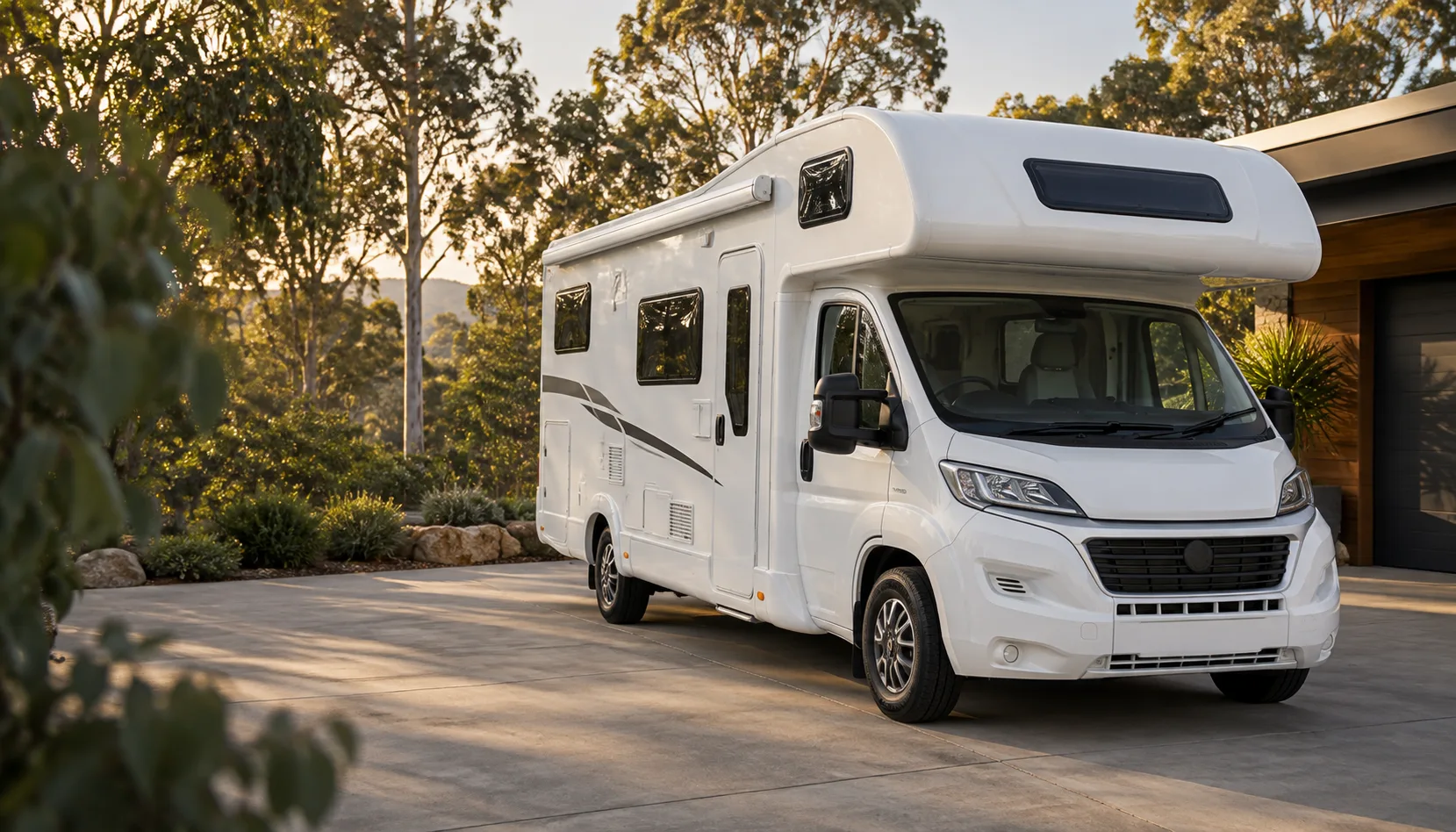
We come to you
Motorhome
Roadworthy Certificates. Fast!
Mobile roadworthy inspection enquiries for your home on wheels. We come to suitable locations across Brisbane and the Gold Coast.Loading current on-site pricing…
Get Your Motorhome Roadworthy Certificate!We Come to You.
Looking for a mobile motorhome roadworthy inspection near you?
Roadworthies brings friendly professional service to your home on wheels. Whether you are selling, transferring registration or preparing for registration, share your motorhome’s details so our team can confirm the right inspection.
Certificates for all motorhomes, campervans and conversions
From campervans and coach-built motorhomes by makes such as Jayco, Avan and Avida to converted vans, each vehicle has its own specifications. Tell us the make, model, GVM and any modifications, including added travelling seats or suspension changes. Have vehicle plate details and relevant approval paperwork ready so we can confirm service suitability.
We Come to You. Home or Office
We visit your home or office across Brisbane Northside, Brisbane Southside and the Gold Coast. Current motorhome inspection pricing is loading… Locations outside our service area may incur a travel charge. Send the full address and access details so our team can confirm coverage and the total cost for your motorhome.
Choose a suitable parking area with room around the vehicle. Mention low branches, narrow gates, steep driveways or storage-site access restrictions before your visit. Use our fast, online booking form to arrange your onsite inspection.
Your Certificate in Four Easy Steps
Book Your Inspection
Use our fast online booking form, or call us to lock in your inspection.
We Confirm Arrival Time
We call on the day to confirm when your inspector will arrive.
We Inspect Your Vehicle
Your inspector checks your vehicle at the agreed location.
Certificate Issued
Your certificate is issued on site.

Motorhome Roadworthy FAQs
What does a mobile motorhome inspection cost?
Current motorhome inspection pricing is loading… The team confirms the inspection type, vehicle suitability and any travel charge before your appointment. Use our fast online booking form to enquire.
Which certificate does my motorhome need?
Up to and including 4,500 kg gross vehicle mass (GVM), motorhomes fall within the safety certificate category. Above 4,500 kg GVM, motorhomes require a certificate of inspection (COI). Send your rated GVM, axle configuration and registration details so the team can confirm the correct inspection and whether we can provide it.
When do I need a motorhome safety certificate?
For motorhomes up to 4,500 kg GVM, a safety certificate is generally needed to transfer registration to a new owner, transfer interstate registration to Queensland, or re-register an unregistered vehicle. You can advertise a registered motorhome before obtaining one, but generally need it before disposing of the vehicle to a private buyer.
Are there exemptions?
An unregistered vehicle can be sold without a safety certificate, although registration requirements apply later. Sales to or between licensed motor dealers and some transfers involving spouses, deceased estates or exempt areas may be exempt. Confirm your circumstances with TMR on 13 23 80.
Can you inspect at home, work or storage?
We visit suitable locations across Brisbane Northside, Brisbane Southside and the Gold Coast. Share the full address, vehicle dimensions, gate width, height restrictions and parking arrangements. Arrange permission and access at a storage facility. The team confirms vehicle and site suitability and any travel charge.
What does the inspection cover?
The inspection checks applicable vehicle safety standards, including tyres, brakes, steering, suspension, body condition, windscreen and lights. Conversions and travelling seats must also meet applicable requirements. It is not a comprehensive mechanical assessment or a living-area appliance inspection.
Does my motorhome also need a gas certificate?
Queensland guidance requires a vehicle with a gas system to be inspected by an authorised gas installer when sold or bought, with a separate vehicle/vessel inspection certificate issued. This certificate is valid for 3 months; exemptions can apply. Tell the team about fitted gas equipment. A roadworthy certificate does not replace gas certification.
How long is a safety certificate valid?
Private sellers have 2 months or 2,000 km from issue, whichever comes first. Licensed dealers have 3 months or 1,000 km. A safety certificate permits one transfer. These limits apply to safety certificates, rather than heavy motorhome COIs.
What if my motorhome is over 4.5 tonnes?
Heavy motorhomes require a COI, normally valid for 12 months unless cancelled. Queensland lists motorhomes from 4,501 to 16,000 kg GVM for inspection at an approved inspection station. Larger vehicles generally use an NHVR inspection site, with a special provider rule for two-axle motorhomes. Contact us before booking to confirm suitability for the required inspection.
What happens if my motorhome fails?
Your inspector explains the issues that need attention. Arrange repairs, then contact our friendly professional team to confirm reinspection arrangements, the timeframe and any charge. A certificate is issued only when your motorhome meets the applicable requirements.
How do I book and how long should I allow?
Use our fast, convenient booking form or call 0401 813 031. Provide the make, model, GVM, registration details and inspection address, plus any conversion or modification paperwork. Our team confirms availability, the suitable inspection and how much time to allow.
Do you supply on-site gas certification?
We do not supply gas certificates. A gas compliance certificate must be issued by an appropriately licensed gas fitter after the gas system passes inspection. Checks include LPG cylinder test dates, regulators, flexible gas lines, ventilation, isolation valves and appliance operation, along with pressure testing for leaks. Please contact your nearest appropriately licensed gas fitter to arrange a gas inspection and certification.
Before your inspection
14 Quick Self-Checks
People often ask what they can do prior to their roadworthy or safety certificate inspection. A few optional self-checks before your appointment can help you spot obvious problems and organise repairs early. Start with your motorhome safely parked on level ground, with the parking brake applied.
Lights & Indicators
Check headlights, indicators, hazards, brake lights, reversing lights and any fitted clearance or side-marker lights. Ask someone to help while the motorhome is safely secured. Look for damaged lenses, loose fittings or lights that do not work.
Tyres & Tread
Check every tyre, including inner tyres on dual-wheel setups, for worn tread, cracks, cuts, bulges and uneven wear. Tyres can deteriorate while a motorhome is stored. Use a tread-depth gauge and the manufacturer’s pressure guidance, and ask a tyre professional to check tyre condition and suitable load ratings.
Brakes & Parking Brake
Tell your mechanic about a soft or sinking brake pedal, grinding noises, pulling to one side or a parking brake that does not hold securely. Do not drive a motorhome with suspected brake faults. Leave brake-performance testing to a qualified professional.
Wipers & Washers
Check that the wipers move smoothly and clear the windscreen without leaving heavy streaks. Replace split or perished blades, top up washer fluid and make sure the jets spray onto the glass. Check the rear wiper and washer if fitted.
Horn
Give the horn a brief check while parked somewhere suitable. It should operate reliably and sound clearly. If it is weak, intermittent or silent, arrange a repair before your inspection.
Mirrors & Glass
Check that mirrors are secure, adjustable and provide a clear view around the motorhome’s wider body. Look for damaged glass or obstructions to the driver’s view. Secure curtains, blinds and loose items clear of the windscreen before driving.
Seatbelts & Buckles
Check the belts and buckles at designated travelling seats for damage, fraying and correct operation. Tell the inspector about added or altered seats and seatbelt mountings. A lounge or dining seat is not automatically suitable for carrying a passenger while travelling.
Fluid Leaks
Look for fresh drips beneath the motorhome after it has been parked on a clean, level surface. Clear water from air conditioning can be normal, but unexplained fluid loss needs checking. Do not identify fluids by colour alone or crawl under an unsupported vehicle.
Bodywork & External Fittings
Walk around the motorhome and look for sharp edges, loose panels and corrosion near structural or mounting points. From ground level, check for visibly loose awnings, racks and other external fittings. Secure awnings and fitted equipment in their travel positions; leave roof access and structural assessment to a professional.
Exhaust & Smoke
Notice any unusual exhaust noise, rattling, fumes or persistent smoke. These can indicate a fault that needs diagnosis. Only run the engine in an open, well-ventilated area, and avoid touching hot exhaust components.
Steering & Suspension
Report unusual steering play, heavy steering, clunks, persistent bouncing or a motorhome that sits unevenly. These symptoms need professional assessment. The inspector checks components that are not always visible during a walk-around.
Seats, Doors & Storage
Check that travelling seats are secure and their adjustment mechanisms lock. Make sure cab and entry doors, external lockers and storage compartments close securely. Stow loose belongings and secure cupboards before travel, and keep inspection access clear.
Dashboard Warning Lights
Follow your owner’s manual to check the normal warning-light sequence at start-up. If a brake, ABS, airbag or other fault warning stays on, arrange diagnosis. Do not disconnect or cover a warning lamp to hide a fault.
Wheels & Modifications
Look for damaged wheels or missing wheel nuts without loosening anything. Leave bearing, fastener and wheel-suitability checks to a professional. Tell the inspector about motorhome conversions, added seating, suspension changes, tow bars and other modifications, and have any approval paperwork ready.
Not Sure About Something?
If you have any questions feel free to give us a call. We can help with professional advice and get you booked in for your vehicle roadworthy inspection, or simply book online using our fast, convenient booking system and we'll be out to you super fast!
This guide focuses on preparing the vehicle for a roadworthy inspection. For concerns about living-area appliances, gas installations or mains electrical equipment, arrange a separate check with an appropriately licensed specialist.
Your inspector assesses the motorhome against the applicable Queensland inspection criteria. View the official vehicle inspection manuals.